
Category: For Sleep
-
How To Stop Insomnia From Ruining Your Life: An Insomnia Therapist Perspective

For some people, insomnia feels all-consuming – it pervades through every inch of their lives and they feel helpless to stop their sleep struggles. They lie at night wide awake, counting down the minutes until they have to wake up wishing for sleep to take them away even for a moment. But sleep never seems…
-
How Much Sleep Does A 60-Year-Old Need?

People are often attached to the magic 8-hour number when it comes to sleep needs. In reality, there are individual differences in how much sleep each person needs – some folks are 9-hour sleepers, others are 6-hour sleepers – and some are another number entirely. In fact, trying to get 8 hours of sleep…
-
CBT Self-Help Guide For Treating Insomnia Based On Sleep Science
Insomnia disorder is sleep problem defined by difficulty falling and/or staying asleep that happens at least three times a week and has persisted for at least three months. Additionally, these nighttime problems are combined with daytime symptoms, like exhaustion, irritability, and difficulty concentrating. The problems also happen even if you give yourself enough time to…
-
Should I Leave Or Stay In Bed When I Cannot Sleep?
In insomnia, people have high anxiety about being unable to sleep. Moreover, they often spend a lot of their time in bed awake and feeling distressed. Over time, their brain begins to make an association between the bed and wakefulness (known as conditioned arousal). If you have ever had the experience of going to bed…
-
How I Help People With Insomnia As A CBT Therapist

Millions of people struggle with insomnia. In fact, some studies suggest that nearly one in three people experience at least one symptom of insomnia, such as difficulty falling and/or staying asleep, or waking up too early. Most people are familiar with sleep medication, but there is less familiarity with the use of therapy (like cognitive…
-
Cure Sleep Anxiety By Changing One Way You Think About Sleep

In many ways, insomnia can be described as a disorder of sleep anxiety. People with insomnia are constantly worried about not being able to fall asleep quickly enough, not getting enough sleep, and whether this sleep deficit will impact their next day. For example, there may be fears that the lack of sleep will lead…
-
Treating Insomnia Naturally Using Science-Based Strategies (Without Drugs)

Chronic insomnia is a troubling sleep problem which is defined by difficulty falling and/or staying asleep, as well as daytime exhaustion. Most physicians and mental healthcare providers are not very well-equipped to deal with chronic sleep problems. They will usually provide sleep hygiene recommendations or prescribe medication. The problem is that sleep hygiene does not…
-
How Sleep Problems Stick Around: The 3P Model of Insomnia
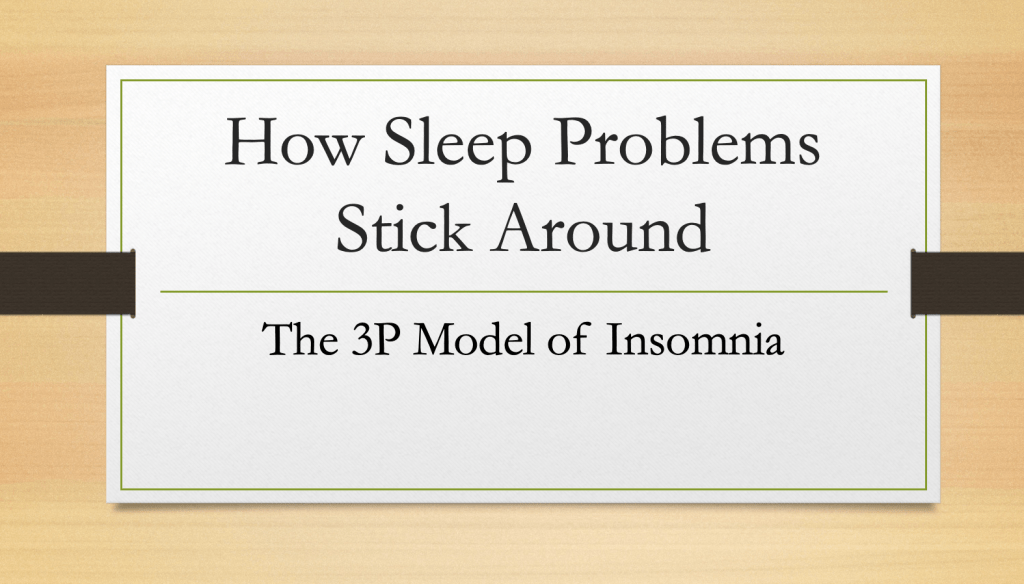
Bad nights versus insomnia disorder Everyone has a bad night from time to time. However, for some, the one bad night turns into a steady stream of bad nights. Suddenly, you are not having a bad night anymore. You have insomnia. The question is: why do sleep problems sometimes stick around? In this post, I…
-
Simple Ways To Get Better Sleep If You Have Insomnia Based on Sleep Science

Introduction The world is full of myths, misconceptions, and misinformation about how to treat insomnia. For example, people talk about sleep hygiene as a solution to insomnia; in reality, sleep hygiene is not an effective strategy to treat insomnia. Even physicians tend to immediately jump to sleep medication, which most people do not prefer because…
-
Optimizing Your Sleep: Six Components Of The Sleep Health Framework

The Sleep Health Framework (Buysse, 2014) helps us to understand sleep health in a multidimensional way, in which the sleep-wake cycle is broken into six important components that together optimizes our health and functioning. These sleep components include: In this post, I discuss each of these components in turn and provide strategies to optimize these…
 Simply mental health