

In many ways, insomnia can be described as a disorder of sleep anxiety.
People with insomnia are constantly worried about not being able to fall asleep quickly enough, not getting enough sleep, and whether this sleep deficit will impact their next day. For example, there may be fears that the lack of sleep will lead to making mistakes at work or forgetting to attend appointments.
As a result, there is an implicit phobia in insomnia of being awake at night. Being awake at night is viewed as a very frightening experience because it means that they are not able to get the sleep needed to feel good and function the next day.
If they happen to be awake, they are likely to feel anxious, frustrated, and are constantly white knuckling themselves in bed hoping for a wink of sleep.
This phobia of being awake at night leads to several issues. First, the increase in anxiety makes it harder to fall asleep. When stress is high, sleep comes less easily. This usually is evolutionarily adaptive (but not when the fear is about not sleeping). Second, the anxiety makes it hard to follow evidence-based recommendations like getting out of bed when sleep is not coming. Third, because we are constantly distressed, there starts to be an association formed between the bed and wakefulness. Over time, the bed becomes an even more frightening place where dreams go to die and sleep never comes.
Change the way we think about being awake at night
I had a client with insomnia who came in with many of the issues described above. She was constantly worried about not being able to sleep at night, and would spend hours tossing and turning in bed.
Through cognitive behavioural therapy, the client learned the proper skills needed to improve her sleep. Moreover, she began to become less scared of being awake at night. In fact, she began to see night time awakenings as opportunities to do things she enjoyed – for example, watching a movie, reading a nice book, or just taking some peace and quiet for herself. With her fear of being awake at night gone, her insomnia disappeared shortly afterwards.
Benefits of viewing being awake at night as good
Although a little counterintuitive, a healthy dose of acceptance and seeing the nighttime awakenings as an opportunity can have a number of benefits.
1) By reducing our frustration and stress related to not sleeping, we are in a much more optimized condition to sleep.
2) We feel more readily able to follow the recommendations. For example, stimulus control can be very helpful to break the association between bed and wakefulness. By getting up at a regular time, we can also build up more pressure for sleep the next night instead of feeling paralyzed in trying to save the current night.
3) This perspective is just more enjoyable all around. Would you rather be tossing and turning – suffering throughout the night? Or would you rather just enjoy some peace and quiet and read the book you’ve been putting off?
The use of facing being awake is actually a technique that sleep clinicians use and is supported by research to help with reducing sleep anxiety and falling asleep quicker. The name of this technique is paradoxical intention – where the person focuses on staying awake for as long as possible when they are in bed.
Summary and further resources
Of course, this shift is easier said than done for those who have struggled with insomnia for a long time. I apologize if this recommendation comes off a little tone deaf. It’s just that the fear of not being asleep at night is a strong maintaining factor of insomnia, and viewing being awake at night a little differently can come with a number of benefits that allow us to fall asleep quicker. It’s like the person stuck in the Chinese finger trap who decide to relax their fingers rather than pulling hard (which keeps them further in the trap).
If you do happen to be awake at night, I encourage you to see it as a place for opportunity rather than a place of distress. Be curious and just see what happens!
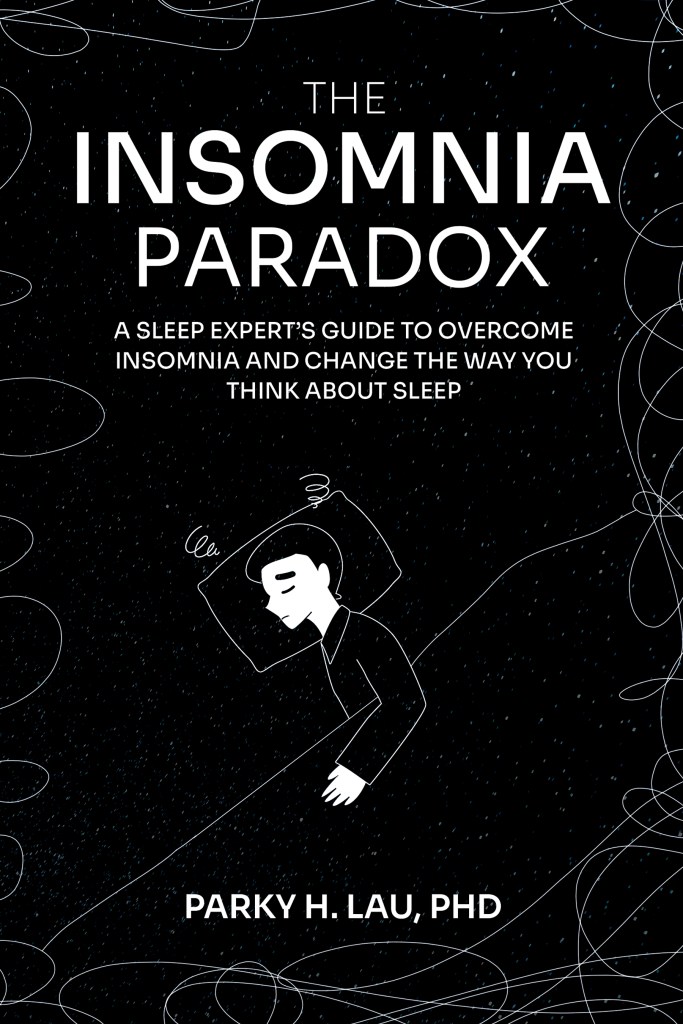
If you’re interested in learning more, here’s a neat book that I wrote: The Insomnia Paradox.
Best wishes,
P
 Simply mental health